Professional Summary

I am a Ph.D. candidate in Computer Science at the University of Copenhagen, specializing in computer vision, deep learning, and medical image analysis. My work focuses on building robust, end-to-end machine learning systems, with expertise in 3D segmentation, self-supervised learning, object detection, domain generalization, and explainable AI. I design and implement solutions across the full ML lifecycle — from data engineering and modeling to evaluation, reproducibility, and deployment.

Alongside research, I have industry and hospital collaboration experience developing production-oriented vision systems and leading small technical teams in interdisciplinary, international environments. I am particularly motivated by applying strong ML engineering and problem-solving skills to real-world products where robustness, interpretability, and measurable impact are central.

If you are interested, please reach out to collaborate 😃

Outside of research, I enjoy solving mechanical puzzles, exploring new technologies, and studying psychology and human behavior. Currently, I am reading evolutionary biology (mostly Richard Dawkins books) out of curiosity about complex adaptive systems and the evolution behind them.
Education

PhD Computer Science

Copenhagen University

MS in Biomedical Engineering

Sharif University of Technology

BS in Biomedical Engineering

Amirkabir University of Technology

Interests

Image Segmentation Medical Data Analysis Explainable AI Self-Supervised Learning Object Detection Domain Adaptation Image Processing Deep Learning Machine Learning Computer Vision

Experience

  1. Machine Learning Intern | Research Intern

    Amsterdam UMC | VU Amsterdam
    Developed and validated a Siamese deep learning model to predict cancer treatment response from pre- and post-treatment CT scans (n=502). Built an end-to-end training and cross-validation pipeline using PyTorch and MONAI, collaborating closely with oncologists and radiologists to ensure clinical relevance and interpretability. Led a cross-institutional university–hospital project.
  2. Machine Learning Intern | Research Intern (Remote)

    Geneva University Hospital
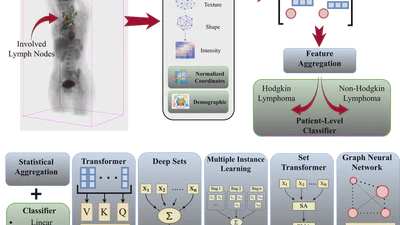
    Built a multi-center deep learning system to predict cancer subtype from PET scans using set-based modeling (Transformers, Deep Sets, MIL, GNN). Achieved ROC-AUC up to 0.91 in cross-validation and improved external performance from 0.81 to 0.87 via test-time adaptation (entropy minimization). Led a fully remote university–hospital collaboration.
  3. Deep Learning Engineer

    PART Artificial Intelligence Startup
    Developed and deployed YOLO-based object detection models for license plate detection and signature localization, achieving mAP0.5 of 0.97 and 0.94 respectively. Optimized robustness under varying lighting and quality conditions. Containerized and deployed models using Docker with real-time inference APIs in production.
  4. Technical Lead | Computer Vision & Signal Processing Engineer

    Iran’s National Elites Foundation
    Led the computer vision group in developing a non-contact heart rate estimation system from RGB video (3.02 MAE). Designed signal processing pipelines including ROI tracking, temporal filtering, and amplitude normalization. Coordinated deployment on mobile and embedded platforms for real-time inference.
  5. Engineering Intern

    Electro-Xray Company
    Performed repair and maintenance of medical imaging systems including CT scanners, portable radiology devices, C-Arm systems, mammography units, and OPG systems.
  6. Teaching Assistant

    Copenhagen University | Sharif University of Technology | Amirkabir University of Technology
    Teaching assistant for courses in Deep Learning, Numerical Methods, Medical Image Analysis and Processing, Image Processing, and Medical Imaging Systems.

Education

  1. PhD Computer Science

    Copenhagen University
    Applications of Deep Learning Algorithms for Medical Data Analysis
  2. MS in Biomedical Engineering

    Sharif University of Technology
    Worked on Medical Image Segmentation Using Deep Learning Methods
    Read Thesis (Persian)
  3. BS in Biomedical Engineering

    Amirkabir University of Technology
    Design and implementation of brain surgery bipolar electrocoagulation simulator using haptic technology.
    Read Thesis (Persian)
Featured Publications
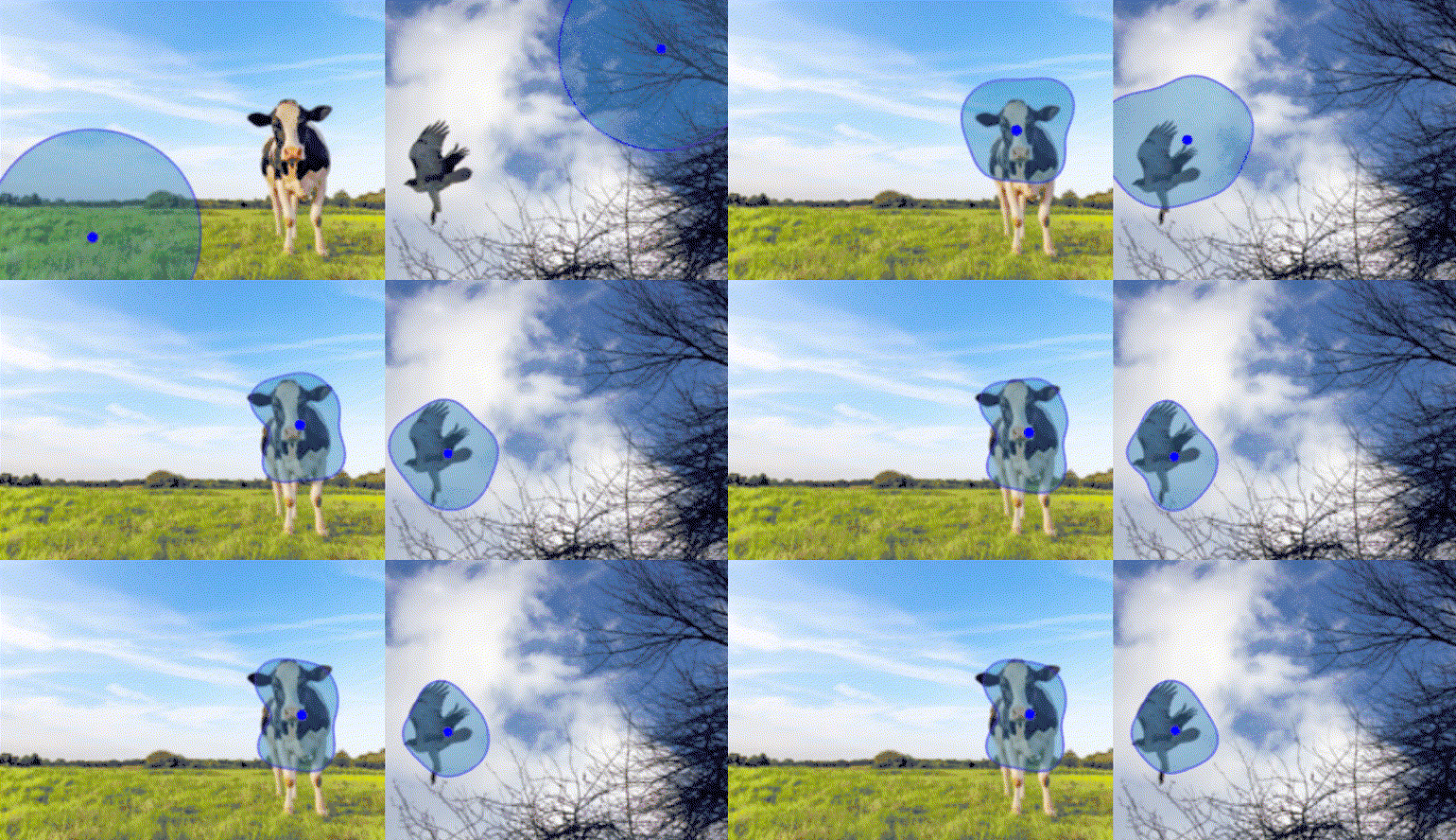
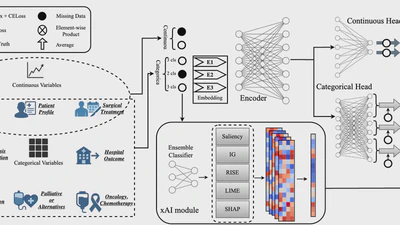
Extremal Contours: Gradient-driven contours for compact visual attribution featured image

Extremal Contours: Gradient-driven contours for compact visual attribution

Training-free method that uses gradient-driven smooth contours for compact visual attribution.

Reza Karimzadeh
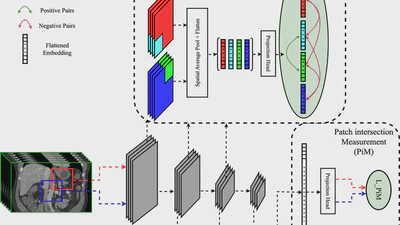
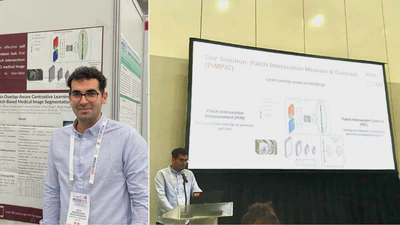
PiMPiC: An Overlap-Aware Contrastive Learning Framework for 3D Patch-Based Medical Image Segmentation featured image

PiMPiC: An Overlap-Aware Contrastive Learning Framework for 3D Patch-Based Medical Image Segmentation

Contrastive learning framework with overlap-aware modules for improved 3D medical image segmentation.

Reza Karimzadeh
Recent Publications
(2025). Extremal Contours: Gradient-driven contours for compact visual attribution. arXiv:2511.01411.
(2025). PiMPiC: An Overlap-Aware Contrastive Learning Framework for 3D Patch-Based Medical Image Segmentation. DEMI 2025.
(2025). CARMA: Collocation-Aware Resource Manager with GPU Memory Estimator. arXiv:2508.19073.
(2025). Prediction of Radiological Diagnostic Errors from Eye Tracking Data Using Graph Neural Networks and Gaze-Guided Transformers. GRAIL 2024.
(2024). Generating Synthetic Computed Tomography for Radiotherapy: SynthRAD2023 Challenge Report. Med. Image Anal..
Recent & Upcoming Talks
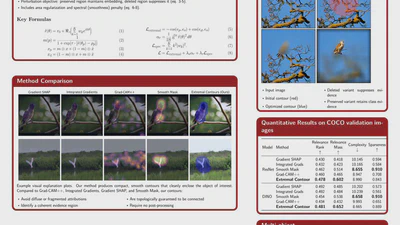
Extremal Contours featured image

Extremal Contours

Extremal Contours; Gradient-driven contours for compact visual attribution

avatar
Reza Karimzadeh
PiMPiC Framework featured image

PiMPiC Framework

PiMPiC; An Overlap-Aware Contrastive Learning Framework for 3D Patch-Based Medical Image Segmentation

avatar
Reza Karimzadeh